
Digital Airport
Airport business process management, digitalization, and automation featuring RTLS navigation and the tracking of personnel and equipment on a digital twin of the apron.
Implementing airport operational management systems (AODB, RMS, FIDS, BRS, A-CDM, APS) automates the oversight of technical services and optimizes the airport's economics. This goes beyond mere routine automation; it represents a comprehensive digital transformation of the ground services that manage apron operations.
A smart airport ensures transparent monitoring of every stage of flight servicing and synchronizes the work of personnel and equipment. It also creates a unified digital 3D map of the airport, its facilities, and surrounding areas to facilitate passenger navigation and ground service operations.
This integrated smart airport system drives growth in NPS and CSI metrics: passengers enjoy fast, convenient service, while the airport gains a competitive edge and fosters repeat visits.
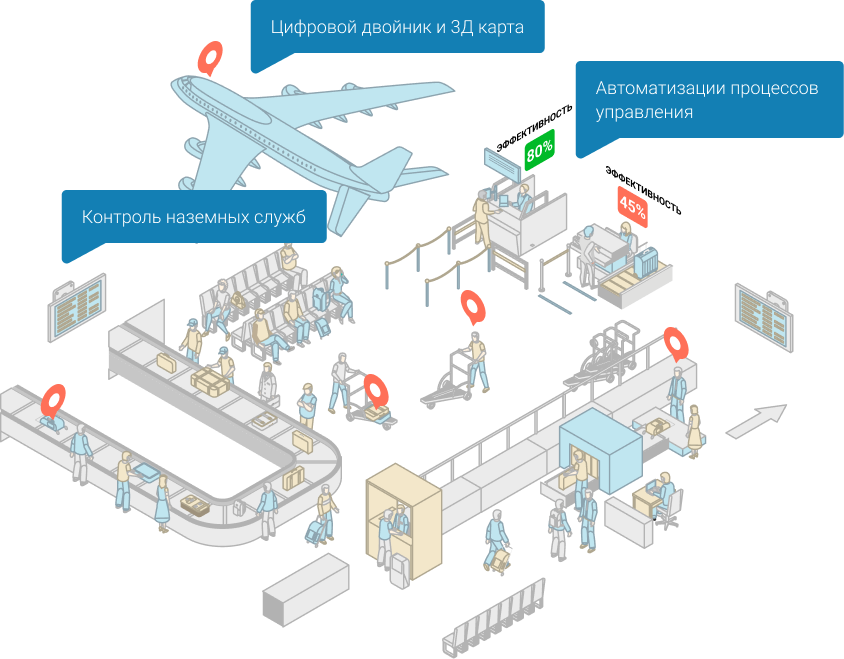
Capabilities of the INP Digital Airport System

Centralized management of all processes
The unified INP platform ensures transparency and standardization of business processes, simplifying oversight and accelerating decision-making.

Resource and time optimization
The digitalization of all processes helps identify untapped productivity potential and significantly reduce the time required to perform operations.

Monitoring of personnel and equipment performance
The system provides data on task progress, staff workload, and the utilization of specialized equipment, helping to promptly eliminate bottlenecks.

Minimizing delays and errors
Intelligent algorithms and task analysis make it possible to minimize the human factor, increasing the stability of service for aircraft and passengers.

Reduction of operating costs
A precise planning model and monitoring system enable more efficient resource utilization and a significant reduction in operating costs.

Scalability and 24/7 support
24/7 support and INP’s modular architecture ensure the system’s smooth evolution—from the integration of new features to adaptation for the airport’s future needs.
Smart Airport module functionality

Interactive airport map
Real-time visualization of aircraft, ground support equipment, and personnel on a digital 3D airport map. Monitoring of access zones, speed limits, and the location of equipment and engineering infrastructure (indoor and outdoor lighting, HVAC systems, video surveillance, etc.).

Analytics and Statistics (BI)
Graphical visualization of key metrics and generation of dozens of types of operational and strategic reports to evaluate the performance of airport processes and personnel.

A unified app for employees and administration
For staff: personalized, map-linked tasks, completion tracking, notifications, and access to operational data and performance standards. For management: access to key performance metrics for process monitoring, as well as a real-time map showing the locations of assets and personnel.
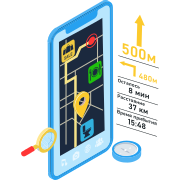
Passenger mobile app
An interactive digital airport map on your phone with route-finding capabilities, flight schedules, delay alerts, notifications about out-of-service elevators or escalators, and other information—including promotional content. A direct feedback channel to the administration via a built-in messenger.

Long-term planning
Developing long-term plans for personnel and equipment utilization, taking into account electronic aircraft servicing schedules, airline flight schedules, days off, and available resources.

Operational Resource Management (RMS)
Short-term planning, control, and intelligent allocation of material and human resources in real time, accounting for dynamic, real-time factors.

Baggage handling and sorting (BRS)
Automation of baggage handling processes based on BSM messages. Passengers can quickly locate their luggage thanks to BLE tags that send a notification when the bag is on the carousel.
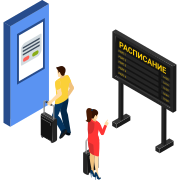
Visual passenger information (FIDS)
Transfer of information and advertising materials to terminal monitors and to a mobile application: encrypted transmission channels, remote control, flexible configuration of advertising and displayed flight data.

Reference and Master Data (RMD)
Storage and updating of all regulatory and reference documentation required for airport operations and for interaction between departments and passengers.
Core interfaces
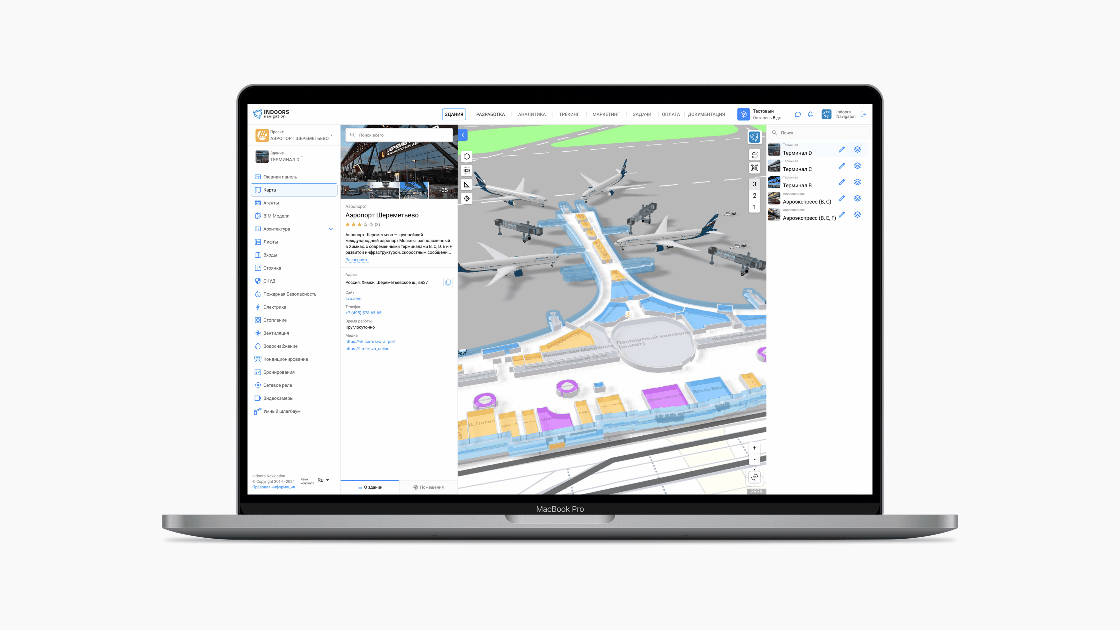
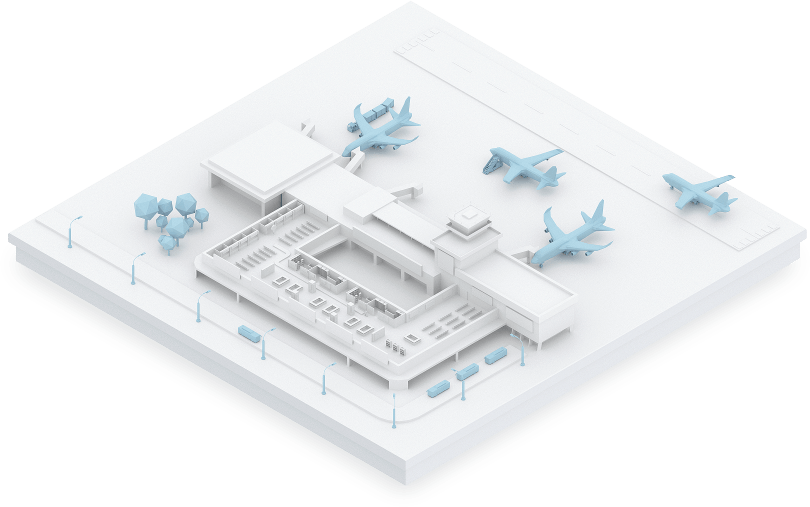
Airport navigation
Digitalization of the airport is one of the main tasks in the modern realities of the constant growth of passenger traffic and a large number of service units.
Thematic publications on our blog

The Digital Revolution in Aviation Catering: How smart systems are transforming avionics control
Невидимый хаос за кулисами авиационных кухонь В гигантских кейтеринговых комплексах международных аэропортов, где ежедневно готовят и упаковывают де…